BYOSoftwarefactory
The other day at Thinkmill I demoed to the team a software factory I've been building for my personal apps and agent runtime. Having now built a whole one of them, with a haughty confidence I felt qualified to define the whole category.
Autonomous agents, orchestrated into a team's development workflow.
But I was picturing Kanbans, Jiras, Agiles, and Agents. Big team stuff.
While I was building this factory for myself, I always had larger engineering teams in mind. Bringing agents into our existing workflows, one at a time, and deciding where humans stay in the loop.
To do2
In progress1
Review1
Ready for release1
Ralph loopin'

Within my own dev-loop, I'd been trialling different ways to bring agents into my workflow. Markdown files for epics with each task defined, Ralph loops working through them. Switching between harnesses, from IDE to terminal to desktop apps, often juggling multiple sessions at a time.
That was fine for sequential tasks but the more I tried to parallelise, the larger the mental overhead. Things reached a head on a project where I was juggling five-plus tasks at a time for weeks on end. Each had its own agent coding part, agent review, my review and team review feedback loop to keep track of. One of the agents ran locally, some were cloud based, there was a lot to keep track.
I had notes for each ticket to remember where it was up to. I even had a Trello board at one point, but I was managing all of it manually, which was a huge PIA and exhausting.
The Kanban strikes back
I wanted a better more managed way of managing these agents and couldn't get the idea of the kanban board out of my head. I've ran software delivery teams for decades with a kanban so it felt natural to start there as the UX for my own software factory.
This isn't particularly novel. Many software factories connect to Jira or Linear or have their own boards and backlogs to help manage work. But integrating it myself really showed the unlock of such a model, it felt like a leap from trying to manage everything locally, or via plain sessions with cloud-based agents.
I plan with a planning agent that explores the repo and creates tickets and epics once we're happy with the plan. I assign a ticket to a coding agent and it works through coding before handing it off to the review agent. By the time it comes to me, either the agents are at an impasse or it's ready for my final review.
Each agent has their own specific instructions permissions and tools.
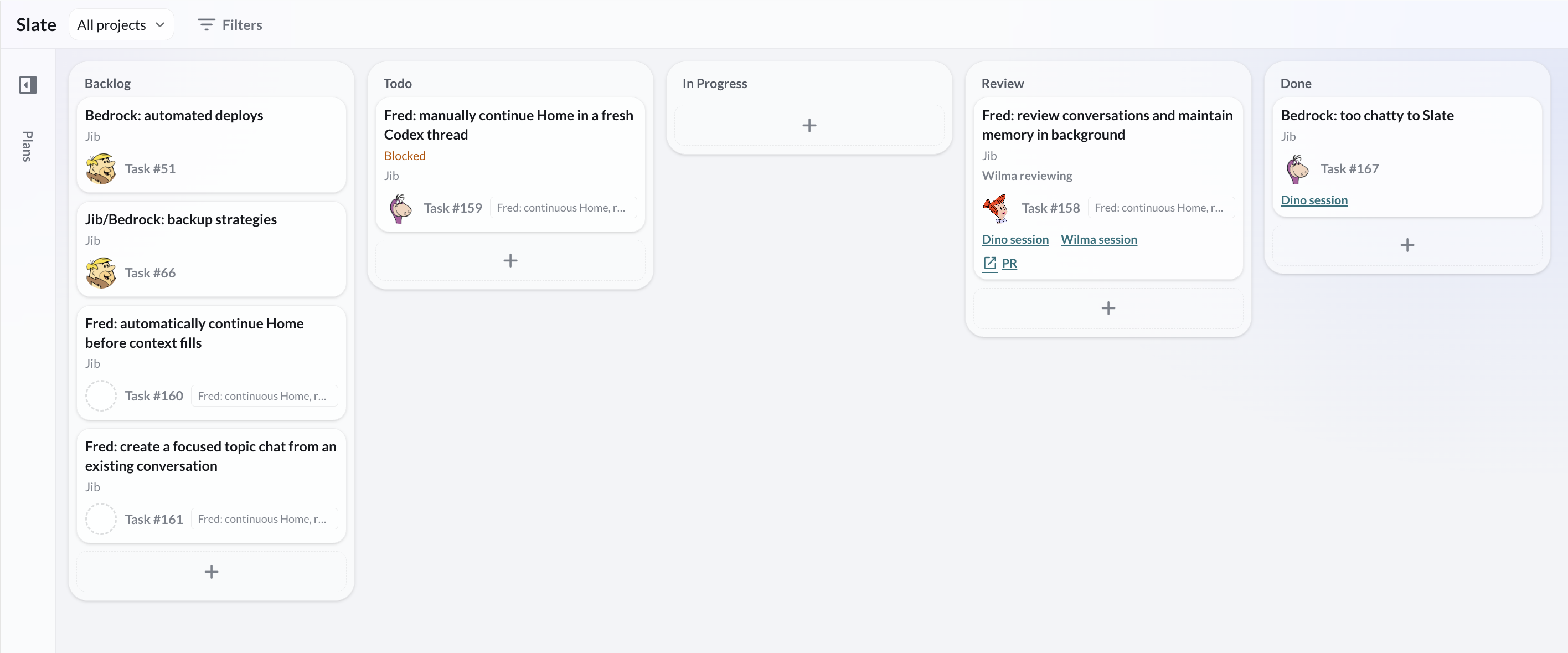
One lesson I learned early was that observability is key. I needed to know what an agent was up to, including its token usage and tool calls. Those were things that mattered to me, so I built the agent-runner and factory around them.
BYO
So its simple, slap some agents into a Kanban, you got yourself a software factory bucko.

Or not. After the talk, other Thinkmillers started sharing how they were improving automation on their own projects, from connecting project tracking to their agents to improving tool call outputs. There were Slack bots making code changes to blog articles, skipping the need for a CMS. Suddenly it was hard to draw the line on what makes a factory and what doesn't.
Devs on X can't also can't agree: maybe Software Factory is cloud, it's recoverability, it's observability, it's no humans in the loop, it's lots of humans in the loop, it comes to you, we build it for you, you should build it yourself, Software Factories are bullshit.
Seeing other examples of what the team had build evolved my picture of a software factory to cover all these ways of automating parts of software development with agents. It can be big or small, for an individual or a whole team, it could be in the cloud, it could even still be local.
The important part is giving agents more autonomy, and freeing ourselves from the grind of managing too many individual agents across too many sessions with too much context. Maybe Software Factory is just a clunky term for the next evolution of how we develop software.
I still like my kanban. It fits the way I work and solves a problem I was having (though the tools I'm building for Thinkmill's Software Factory have me using it less...). But an automated Slack to blog post CMS pipeline? It's SDLC, it's agent automation, it keeps humans in the loop when needed, but you just might not need a kanban.
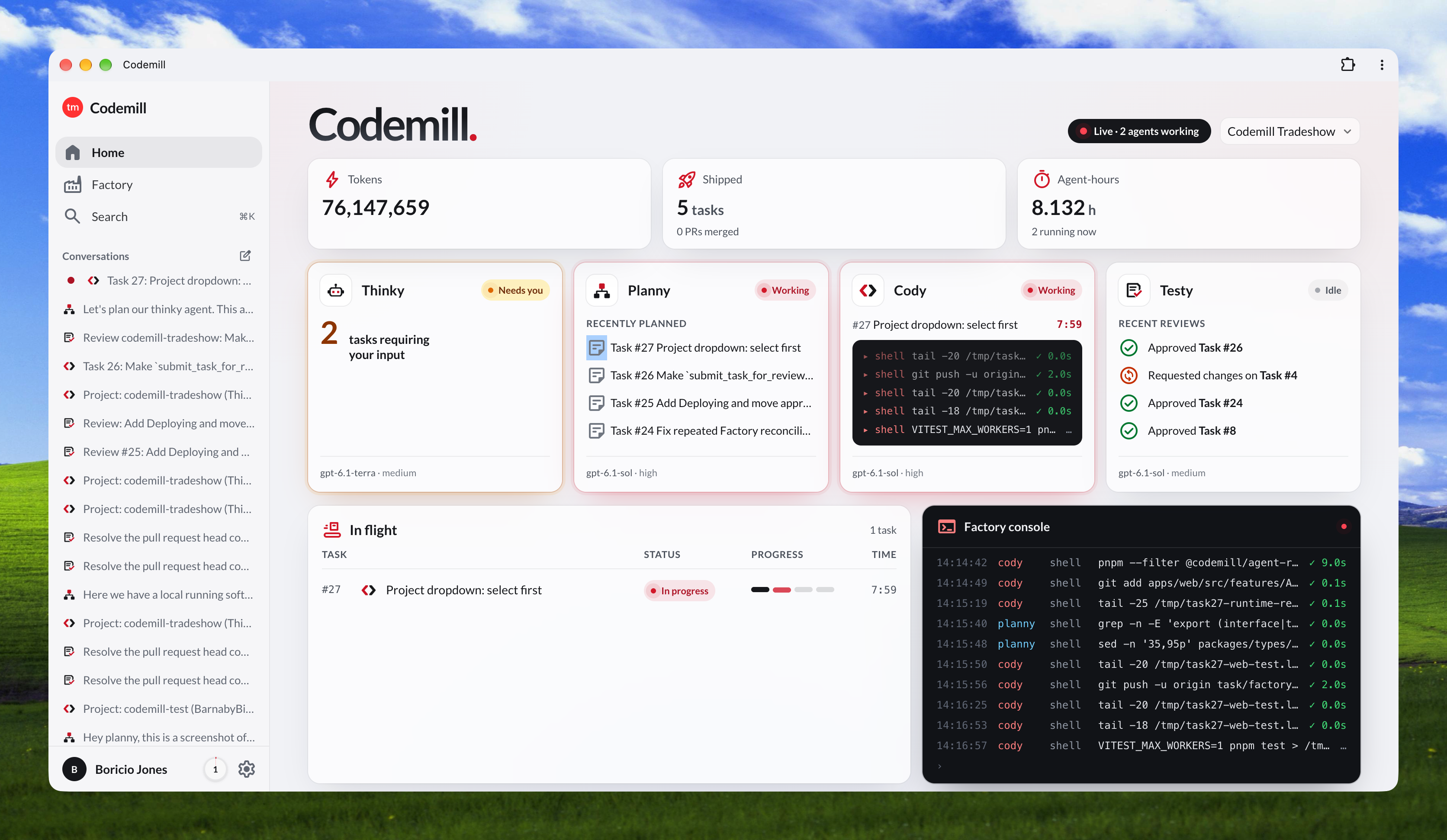
Like building a design system or running a software project, there isn't a one-size-fits-all solution when it comes to agent automation and software factories. We each have our own tools, project constraints and ways of working.
In the end a software factory is what works for you (as well as the friends we make along the way).
Looking to bring agents into your team's workflow? Build your own Software Factory? At Thinkmill, we'll help you work out where they can be useful and fit the approach to your project and team with your own tools.